
Getting Your Solar Battery Size Right
If you're thinking about adding battery storage to your home solar system, you're making a smart move. A battery gives you energy independence and helps you use more of the solar power you generate. But here's the important bit: choosing the right battery size for your home makes all the difference.
Too small, and you'll miss out on the benefits. Too large, and you might overspend on capacity you don't need. This guide walks you through calculating the right battery storage capacity for your Australian home.
Understanding Your Daily Energy Usage
The first step in sizing your battery is understanding how much energy your home actually uses each day. Most Australian homes consume between 15 and 30 kilowatt-hours (kWh) per day, though this varies widely depending on your lifestyle, appliances, and climate zone.
Start by looking at your electricity bills from the past year. Your bill shows your daily energy consumption, usually listed in kWh. Take an average across all months, since usage changes seasonally. Summer months typically see higher consumption due to air conditioning, while winter might be lower in some regions and higher in others.
If you already have solar panels, check your solar monitoring app or inverter display. This shows you exactly how much energy your system generates and how much you use throughout the day. This real data is invaluable for sizing a battery correctly.
Working Out Your Evening and Night Usage
Your battery doesn't need to cover your entire daily energy consumption. It only needs to cover the energy you use when the sun isn't shining, mainly during evening and night hours.
Look at your usage patterns. Most Australian homes use more power in the morning before work and in the evening after sunset. This is when your battery comes into play. Your daytime solar production covers most of your midday needs, so your battery size should focus on those off-peak hours.
A rough estimate works like this: if your home uses 25 kWh per day and about 40% of that occurs in the evening and night, you're looking at roughly 10 kWh of evening usage. This suggests a battery in the 10 to 15 kWh range might suit you well, though this is just a starting point.
Considering Your Local Climate and Seasonal Changes
Australia's climate varies dramatically depending on where you live. This directly impacts how much solar energy you generate at different times of year.
In regions with long, sunny days and minimal seasonal variation, like parts of Queensland and Northern Australia, solar production stays relatively consistent year-round. If you live further south, your winter solar production drops noticeably compared to summer.
During winter months with shorter days and lower sun angles, you'll generate less solar energy overall. This means your battery might need to work harder and discharge more deeply on cloudy days. Some Australian homeowners in southern regions consider slightly larger batteries to handle these seasonal swings more comfortably.
The team at Solahart Hervey Bay understands local climate patterns in your area and can advise whether seasonal variations suggest a larger or smaller battery for your circumstances.
Peak Demand Times and Your Battery's Role
Another crucial factor is your home's peak demand times. Peak demand refers to the moment when your home is drawing the most power simultaneously. This might be when you're cooking dinner, running your dishwasher, and heating water at the same time.
Battery systems need to supply enough power during these peak moments. A battery's capacity (measured in kWh) is different from its power output (measured in kW). You might have a 10 kWh battery, but it can only deliver a certain amount of power at once.
Most modern battery systems can handle typical Australian household peak demands without issue. However, if your home has electric heating, a pool pump, or other high-demand appliances, you'll want a system rated for sufficient continuous power output.
Contact Solahart Hervey Bay to discuss your specific appliances and usage patterns. They can recommend a battery with appropriate power ratings alongside the right capacity.
Working with a Local Expert
While these guidelines help you understand the basics, every home is genuinely different. Your roof orientation, shading from trees, your specific appliance mix, and your personal usage habits all matter.
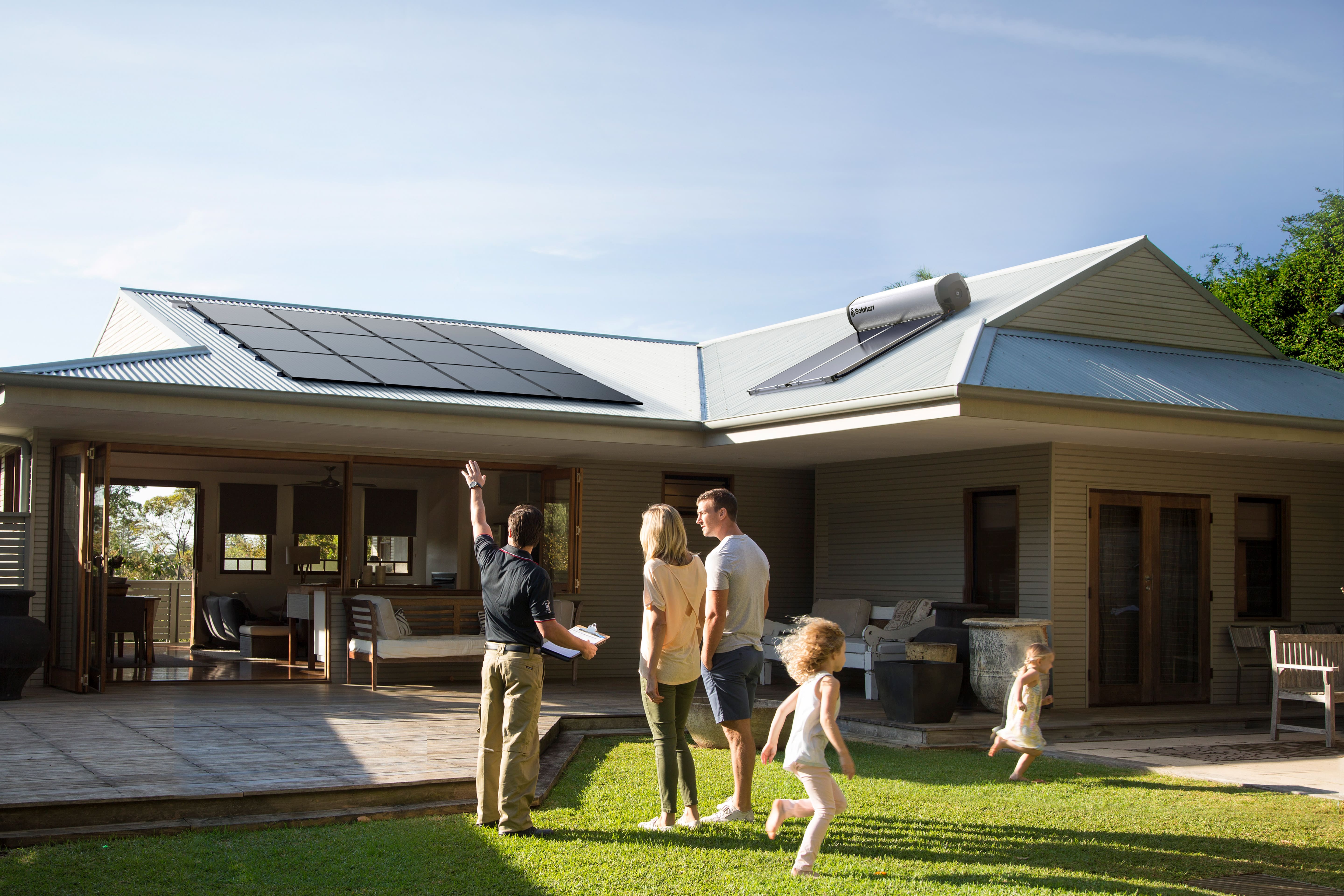
This is why working with a qualified solar installer makes sense. They can review your electricity bills, assess your roof space for solar panels, understand your peak demand times, and recommend the ideal battery capacity for your situation. A professional also considers any future plans you might have, like adding an electric vehicle or heat pump.
Finding Your Perfect Fit
Sizing a battery storage system correctly means you get reliable backup power, improved energy independence, and better value from your investment. Taking time to understand your usage patterns and local conditions guides you toward a system that genuinely meets your needs.
Ready to move forward? Get in touch with Solahart Hervey Bay today for a personalised assessment of your home's battery storage needs.
Get Your Free Quote
Take the next step towards energy independence. Contact Solahart or your local dealer for a free, no-obligation consultation about battery storage sizing for your home.
---
Energy savings vary depending on household usage and location.
